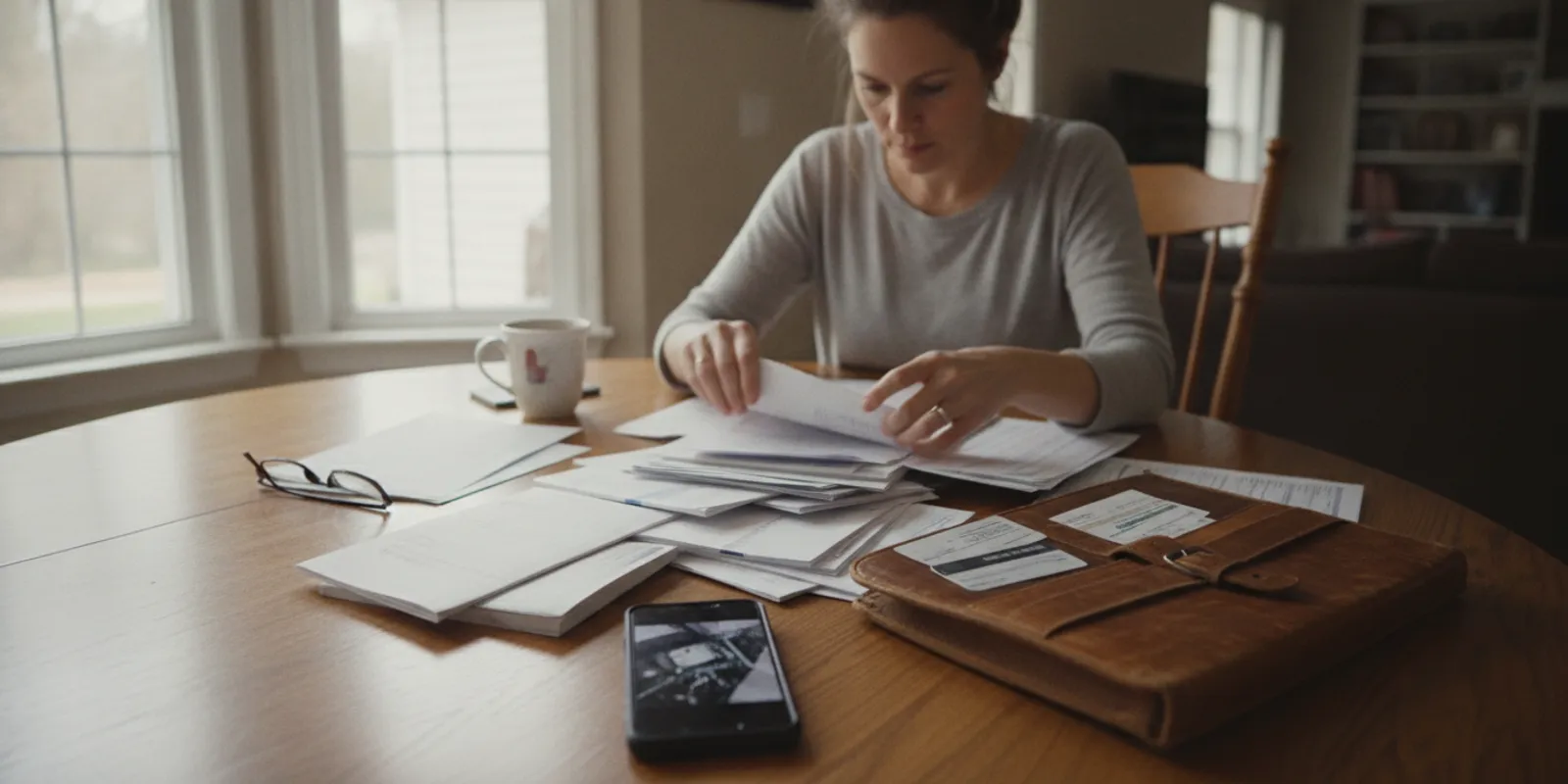
A car accident hospitalization claim can raise questions that are hard to manage while someone is recovering. In Northern Virginia, a collision may leave a patient and family sorting out medical care, vehicle paperwork, calls, memories, and records from several sources. Health and safety come first. When it is manageable, a careful record system can help preserve what is known, show what still needs to be checked, and make later conversations more organized. No single document proves responsibility or establishes whether a claim is available.
Request a free initial discussion
You can call (703) 777-9630 to reach the Law Offices of Clinton O. Middleton, an Ashburn firm serving Northern Virginia. A first conversation can begin with the information you have; you do not need to assemble a perfect file before asking a question.
Crash evidence is a broad term for information that may help explain how a collision happened, what followed, and what care or expenses occurred. It can include photographs, videos, witness details, an official report, vehicle records, medical documents, insurance communications, and notes about changes in daily activities. These materials answer different questions and have different limits.
A photograph can show one view of a place or vehicle at a particular time. A medical record may document symptoms reported, observations, tests, and treatment, but it is not necessarily a complete account of the collision. A witness may have seen one part of the event and not another. A repair estimate can describe visible vehicle damage without resolving how the collision occurred. Keep these sources identifiable instead of treating one item as the whole story.
Hospitalization is important context, but it does not alone establish who caused a collision, whether legal requirements are met, or what a claim may be worth. The event facts, available records, medical information, applicable law, and other circumstances all matter. A careful file preserves information; it does not decide the legal question in advance.
Follow the treating team’s instructions. Do not delay care, rest, or safety measures to collect information. If the injured person is in pain, tired, sedated, or overwhelmed, nonurgent paperwork can wait. A relative can help with practical organization if the patient wants that support, but should not assume authority to make decisions or obtain private records. Medical providers may require consent or a specific authorization.
Use a short first-day checklist rather than trying to solve every issue at once:
Different family members may know different parts of the story. A relative may have heard an intersection from a tow operator, while the patient remembers a different landmark. Write down who supplied each detail and when. If you later correct a note, add the correction with its date rather than silently changing the original entry.
If someone safely photographed the scene, preserve the original files and note who took them and when, if known. Images may show vehicle positions, visible damage, roadway markings, traffic signs, debris, weather, or the wider location. Keep the unedited files, not only versions cropped or annotated for convenience. Do not return to a hazardous location or enter traffic to recreate a photograph.
For dash-camera or phone recordings, act promptly when possible. Some devices overwrite older recordings. Save the complete original file in a secure location and make a separate working copy if you need to review or share a segment. Do not edit the only copy, preserve only a brief excerpt, or access another person’s device or account without permission. If you think a nearby business or public camera may have captured the event, write down the location and approximate time and make an appropriate inquiry. Footage may not exist, may have been overwritten, or may not be available to you.
For witnesses, record names and contact details that they voluntarily provide, where they were positioned, when you spoke, and what they directly observed. Do not coach anyone or ask them to adopt your version. Separate firsthand observations from statements that a person heard from someone else. If two accounts differ, keep both accounts accurately attributed; a difference is information to preserve, not a reason to choose a version by guesswork.
Consider privacy before sharing photos or recordings publicly. A social post can reveal identifying details, the patient’s location, or information outside the intended audience. Preserve the material privately and ask for case-specific guidance before distributing sensitive items. Avoid sending originals through an unsecured channel when a safer method is available.
If law enforcement responded, a report or another agency record may exist. Keep a note of the agency, date of any request, reference number, and response. Save the complete document unchanged. A report may omit details or contain information that requires clarification; do not treat it automatically as a final determination of responsibility. If a passage appears incorrect, identify the exact passage and the source of your concern. Ask the agency about its process or seek legal advice rather than altering the record yourself.
The Virginia Department of Motor Vehicles website is an official place to begin checking motor vehicle information and current request guidance. The existence, contents, availability, and access rules for a particular record depend on circumstances. This general reference does not establish that a report exists or that any particular person is entitled to obtain it.
Make a small record-request log. A useful entry includes the agency or provider, document requested, request date, method, any authorization supplied, response date, and what remains outstanding. Keep a copy of what you sent. If a request is delayed, the log helps you follow up without having to reconstruct the history from emails and voicemail.
Start with a provider list. Include the emergency department or hospital, treating clinicians, follow-up providers, and approximate dates of care. Available materials may include emergency notes, admission and discharge documents, imaging reports, medication instructions, referrals, follow-up notes, billing statements, and payment records. The discharge packet may not be the full chart. Ask each provider how records are requested, what authorization is needed, and whether bills or clinical records require separate requests.
Keep clinical records, billing documents, and insurance explanations distinct. They serve different purposes. A bill can show an amount charged, while a payment statement may show amounts processed or adjusted. Do not assume that one statement captures all expenses or establishes what is owed. Preserve documents as received and make a simple index by provider and date.
If the patient wants to keep a symptom and function log, make it brief and factual. Note dates, symptoms described in the patient’s own words, activities that were difficult, and appointments or instructions. Do not diagnose, exaggerate, or substitute a log for medical care. Ask a healthcare professional about treatment questions or changes in condition. This article is not medical advice.
Where practical, distinguish the patient’s own observations from another person’s notes. If a family member helps record an entry, identify who made it and whether the patient reviewed it. Avoid asking the patient to repeatedly recount a distressing event just to create a more detailed narrative. A concise, accurate note is more useful than a pressured account.
A timeline is an index of events and their sources, not an argument. It can include the collision, emergency response, hospital arrival and discharge, follow-up care, record requests, repair or towing events, insurance contacts, and other important communications. For each item, state what happened, when, and how you know.
| Record type. | What it may show. | What it does not decide. |
|---|---|---|
| Scene photo or video. | A view of vehicles, the road, or damage at one time. | It does not prove the whole sequence. |
| Medical paperwork. | Care dates, reported symptoms, tests, or instructions. | It does not establish who caused the crash. |
| Police or agency record. | An official account and any reference number. | It is not automatically a final fault finding. |
| Repair or tow papers. | Visible damage, a date, or who prepared the document. | They do not explain every cause of the collision. |
| Insurance message. | Who called, what was requested, and any stated deadline. | A request does not resolve coverage or responsibility. |
If records conflict, list both versions and identify the sources. For example, if a family calendar places a follow-up visit on one date but the provider statement shows another, keep both documents and flag the discrepancy for checking. Do not silently select whichever date seems most likely. Mark approximate times honestly, and do not turn a later recollection into a contemporaneous note.
Keep notes factual and private. Do not add legal conclusions such as “the other driver admitted fault” unless you can record what was actually said, by whom, and when. A quote should be exact only if it is remembered or recorded accurately; otherwise summarize it as an approximate recollection.
Save towing receipts, storage notices, repair estimates, photographs of damage, rental-car records, and communications about vehicle access or inspection. If a vehicle is being repaired or disposed of, do not make assumptions about what should happen next. Vehicle preservation and inspection questions can be fact-specific; ask for appropriate advice before taking a step that could make documentation harder.
Store insurance letters and claim references in the same system, but keep each insurer’s communications labeled. After a call, write a brief factual summary with the date, caller, organization, request, and any stated deadline. Save voicemail and email where feasible. If you are asked to sign a release or authorization, read it carefully. Ask what information it covers, who will receive it, and why it is requested. If the scope is unclear, seek clarification or case-specific legal advice before signing.
Coverage and claim handling depend on the policy and circumstances. A request for information does not itself resolve responsibility or prove what benefits apply. Use the timeline to keep track of what was requested and supplied, and retain a copy of any document you send. Avoid guessing about a deadline or assuming that a particular form applies to every collision.
Choose one secure digital folder, paper binder, or combination. Use clear folders such as scene, medical, vehicle, insurance, agency records, and timeline. Give files descriptive names with dates where known. Avoid placing sensitive medical details in a folder that others can access casually.
Keep an unchanged original and a separate working copy when marking or annotating a file. Back up important digital records in a secure location. Do not circulate medical papers broadly in family group chats or post them to public accounts. If another person helps organize the materials, agree on how to protect access and avoid creating unnecessary copies.
Use a one-page index to make the collection navigable. It can list each document, its date, source, and any follow-up needed. Mark items “requested,” “received,” or “not available” rather than leaving a blank that might later be mistaken for an oversight. This simple status system is useful when several providers or organizations are involved.
You can prepare a short outline without resolving every factual or legal question. Include when and where the collision occurred, who was involved if known, what care has taken place, the records you have, which records are missing, and the questions that matter most to you. Mention if a date or detail is approximate. If you are calling on behalf of a relative, explain your relationship and ask what permission is needed before discussing private information.
The firm’s frequently asked questions provide general information about contacting the office and preparing for a discussion. Its Loudoun County personal injury information describes relevant local service context. These pages do not determine whether a specific person has a claim. The Law Offices of Clinton O. Middleton is based in Ashburn and serves Northern Virginia; more than 30 years of legal experience is the firm’s approved broad experience description. An initial discussion is not the same as beginning representation, and fees or arrangements depend on the matter and any agreement.
Possible questions to prepare include:
Do not feel you must present a polished case theory. A clear distinction between what you know, what someone else told you, and what remains unknown is a sound starting point. The office describes multilingual support in English, Spanish, and Polish; ask what language support is available for the conversation you need.
Missing information is common in the early period after a serious collision. Do not invent a time, location, quote, or medical detail to make the file look complete. Record what you do know, who supplied it, and what you have tried to obtain. If a document cannot be obtained, note the request date and response, if any.
When accounts differ, preserve both and ask what could explain the difference. A report may use a different time format from a phone log; a witness may describe a landmark rather than a street number; a patient may remember an event differently after treatment. These possibilities are not conclusions. They are reasons to keep the source labels clear and to avoid treating an inconsistency as proof of anything by itself.
If an original file is lost or a camera has overwritten footage, write down that fact and when it became known. Do not create a replacement and present it as an original. If you receive a corrected record, preserve both the earlier and corrected versions and note who supplied the correction. A transparent record of changes protects the usefulness of the file.
No. Hospitalization documents that care occurred, but it does not alone establish fault, eligibility, or compensation. The particular facts, records, applicable law, and other circumstances matter.
Do not return to a dangerous place to recreate them. Preserve any images others provide with permission, write down recollections when manageable, and note witnesses or records that may help explain what happened.
No. A short timeline and available paperwork can help, but an incomplete file is not a reason to avoid asking questions. Explain which records are still pending.
That depends on the patient’s permission, applicable rules, and the provider’s process. Ask the provider what authorization is required; do not assume a family relationship automatically provides access.
Not necessarily. Requests and appropriate responses depend on the circumstances and any applicable policy. Read releases carefully, understand their scope, and seek clarification or case-specific advice if unsure.
Put medical care first, preserve original information when manageable, label sources, and protect private records. A useful file does not need to be complete or perfectly arranged; it needs to be honest about what is known and what remains uncertain. Evidence may be incomplete, and its significance depends on the circumstances.
Call (703) 777-9630 to ask about a free initial discussion
Choose a practical next step that fits the patient’s needs, and keep safety and privacy at the center of each decision.