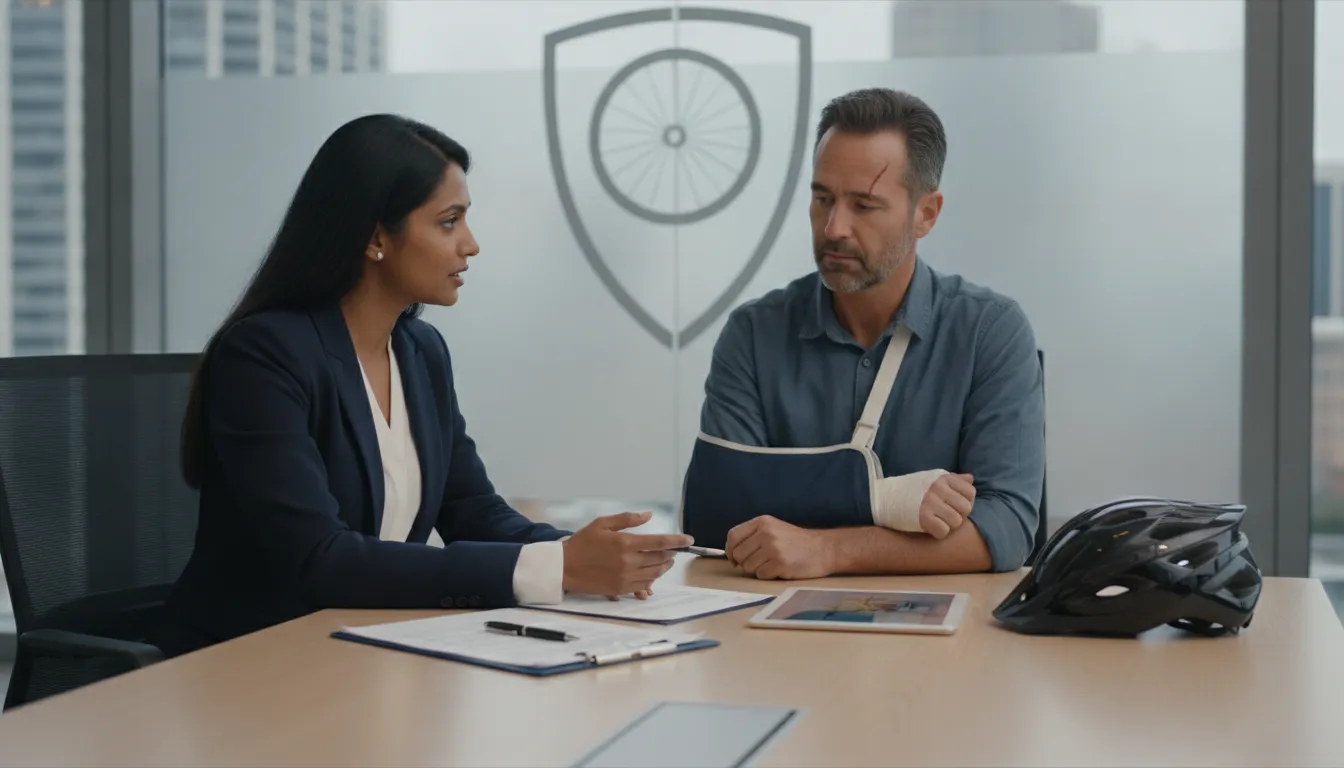
A collision between a bicycle and a vehicle can cause serious injuries and raise complicated questions about responsibility. Drivers, cyclists, road conditions, and other factors may all need careful review. If you’re unsure how the crash occurred, you don’t have to solve that question before seeking advice. A bicycle accident attorney can assess available information, help preserve evidence, and explain how insurance and Virginia fault rules may apply. Keep any photos, medical paperwork, repair estimates, and messages from insurers, but put your safety and care first. This guide walks through the role an attorney may play, when to consider contacting one, and what to bring to an initial conversation. Clinton O. Middleton, Attorney at Law, PLLC offers free consultations to injured people in Loudoun County and nearby communities.
After a bicycle crash, you may be managing medical care, missed work, damaged equipment, and insurance calls at the same time. An attorney can help organize the claim, explain your options, and handle legal matters while you focus on your health. What they can do depends on the facts of the crash and the losses you have experienced.
Important evidence can become harder to find as time passes. An attorney can help collect and preserve photographs of the scene and damaged bicycle, witness contact information, police reports, and available video footage. They may also request records that help clarify how the collision happened and document your injuries.
If it is safe, take photos, write down what you remember, and keep damaged equipment. Seek medical care promptly, and save bills, treatment notes, and work records. These details can help support your account of the crash. Guidance on investigating a bicycle accident also emphasizes the value of scene evidence, witness statements, and police reports.
A bicycle crash may involve conflicting accounts or several possible contributing factors. An attorney can review the evidence and applicable traffic laws, assess your injuries and treatment needs, and identify insurance coverage that may apply. They can also explain how missed work, future care, and other losses may affect your claim.
Fault is particularly important in Virginia, where contributory negligence rules can affect an injured person’s ability to recover compensation. The details matter, so do not assume you have no options based only on an insurer’s initial assessment. A Virginia personal injury attorney can review what happened and explain how state law may apply to your circumstances.
Insurance adjusters may ask you to provide a statement, submit records, or sign forms. An attorney can communicate with insurers, organize documents that support your claim, and help you assess a settlement offer. Before accepting payment or signing a release, understand what rights you may be giving up and whether the offer accounts for your documented losses and expected care.
Many claims are resolved through negotiation. If the parties cannot agree, a lawsuit may be an option. An attorney can explain the court process, prepare filings, and represent you during the case. Hiring a lawyer does not automatically mean going to trial. The goal is to pursue a resolution supported by the evidence and the circumstances of your claim.
Before hiring an attorney, ask how fees and case expenses work. Many personal injury attorneys use contingency fees, which generally means the attorney receives a fee if the claim results in a recovery. Expenses such as filing or medical-record fees may be treated separately, so read the agreement and ask what you could owe. The Forbes Advisor guide to bicycle accident lawyers explains common contingency-fee arrangements.
Your attorney should also outline the expected steps, the information they need from you, and factors that may affect timing. No lawyer can promise a particular settlement or verdict. Clinton O. Middleton, Attorney at Law, PLLC, offers free consultations to discuss your situation, fees, and next steps. The Ashburn-based firm serves clients in English, Spanish, and Polish.
You can ask an attorney for advice at different stages of a bicycle accident claim. Consider speaking with one if you have serious injuries, questions about who was responsible, or pressure to accept an insurance offer. A consultation can help you understand what information to gather and what options may be available.
A bicycle crash can cause injuries that require ongoing care, including head trauma, broken bones, or spinal injuries. You may not know how an injury will affect your health, work, or daily activities until you have had time to recover. That uncertainty can make it difficult to assess an early insurance offer.
An attorney can review available medical information, explain how injury claims are evaluated, and help identify records that may be useful. You do not have to wait until treatment ends to ask questions. If you were injured in Loudoun County or nearby, Clinton O. Middleton, Attorney at Law, PLLC offers personal injury representation and free consultations.
Responsibility for a bicycle crash may be disputed. The driver may give a different account, witnesses may disagree, or a road hazard or another party’s actions may have contributed. If the driver left the scene, identifying them and determining what insurance coverage may apply can add further challenges.
An attorney can help gather relevant evidence, such as crash reports, witness accounts, photographs, and available video. They can also assess whether another person or organization may have played a role. Virginia’s fault rules can affect an injury claim, so avoid relying only on an insurer’s initial assessment. Get advice based on the specific facts before deciding how to proceed.
The costs of a bicycle crash can extend beyond emergency care. Follow-up appointments, medication, rehabilitation, missed work, reduced hours, and damage to your bicycle or helmet may all affect your finances. Save bills, receipts, pay records, repair estimates, and other documents related to the collision.
An attorney can help organize this information and explain which losses may be relevant to a claim. They can also communicate with insurers while you focus on your recovery. The value of a claim depends on its facts and supporting evidence, and no particular result can be promised. If expenses are accumulating or you are unsure what records to keep, consider asking a personal injury attorney for guidance.
An insurer may offer a settlement before you know how your injuries will affect you over time. Depending on its terms, signing a release may prevent you from seeking additional compensation for the claims covered by the agreement. Read the paperwork carefully, and do not feel pressured to sign before you understand what you are agreeing to.
An attorney can review the offer, explain what it covers, and help identify questions to resolve before you respond. Bring settlement paperwork, medical records, and information about time missed from work to a consultation. Forbes Advisor’s guide to choosing a bicycle accident lawyer recommends sharing evidence that helps the lawyer understand both the crash and its impact on your life.
Evidence may become harder to find as time passes. Video footage can be deleted, witnesses may be difficult to reach, and details about the collision can fade. If you are able, save photographs, witness contact information, medical paperwork, and messages from insurers. Do not put yourself at risk to collect evidence.
Virginia has deadlines for filing many injury lawsuits, and the applicable time limit can depend on the circumstances. The Virginia Code sets out filing periods for personal injury actions. An attorney can help determine which rules apply to your situation and whether any exceptions may be relevant. Clinton O. Middleton’s office offers free consultations and serves clients in English, Spanish, and Polish.
A bicycle crash may involve a driver’s actions, a road hazard, poor visibility, or several factors at once. The cause is not always clear at the scene. Photos, witness accounts, medical records, and crash reports can help preserve details and give an attorney a clearer picture of what happened.
Your safety comes first. Get medical care promptly, and document the scene only if you can do so safely. Keep records of your treatment and expenses, and avoid guessing about fault when speaking with an insurer. Clinton O. Middleton, Attorney at Law, PLLC represents injured people in Loudoun County and offers personal injury consultations to discuss possible next steps.
Drivers may cause a crash by failing to yield, turning across a cyclist’s path, or passing without enough room. Intersections and driveways can be especially risky when a motorist does not see a cyclist or misjudges their speed. A driver who changes lanes or pulls into traffic without checking for bicycles may also create a collision.
Details from the scene can help clarify how the crash happened. If it is safe, photograph the roadway, traffic signs, vehicle positions, and damage. Ask witnesses for their names and contact information, and write down what they remember. A bicycle accident overview describes common crashes involving drivers who fail to yield or turn across a cyclist’s path. An attorney can review the available evidence and explain how it may relate to your claim.
A driver looking at a phone, speeding, or opening a car door without checking for cyclists can leave little time to react. A cyclist may hit the door or swerve suddenly to avoid it. Speed can also affect a driver’s ability to notice a cyclist and stop in time.
If you can, note what you observed about the driver and vehicle, and ask witnesses what they saw. Photos of the vehicle, the door’s position, and the surrounding street may preserve useful details. Do not put yourself at risk to collect evidence. A guide to what to do after a bicycle accident discusses distracted driving, speeding, and dooring hazards. An attorney may be able to help determine whether nearby cameras or other records could clarify what happened.
A bicycle crash does not always involve a vehicle. Potholes, loose gravel, debris, uneven pavement, or poor maintenance can cause a cyclist to lose control. Low visibility may make hazards harder to spot, especially at night or in bad weather. In some crashes, a road condition and a driver’s actions may both play a part.
If the scene is safe, photograph the hazard from several angles and include signs, street markings, or landmarks that show its location. Note the date, time, weather, and lighting conditions. When practical, report the hazard to the relevant agency or property owner and keep a copy of the report. Bicycle accident guidance identifies road hazards and maintenance problems as possible contributing factors. Responsibility may depend on who controlled the area and what they knew about the condition.
Evidence collected soon after a crash can help preserve details that may otherwise be lost. If you are able, photograph the scene, your injuries, your bicycle and equipment, vehicle damage, road conditions, and traffic signs. Collect witness names and contact details, and write down what you remember while it is fresh.
Seek medical attention and keep records of appointments, prescriptions, follow-up care, and expenses. Request a copy of the police crash report, and save relevant messages and insurer communications. The Forbes Advisor guide to bicycle accident lawyers explains how evidence can help an attorney understand the crash and its impact. A lawyer can review the materials you have, identify possible gaps, and explain what additional records may help assess your options.
A bicycle accident claim may seek compensation for losses caused by another party’s actions. Depending on the circumstances, those losses may include medical care, missed income, damage to your bicycle, and the physical or emotional effects of your injuries. The available evidence and the specific facts of the crash help determine what losses a claim can include.
Keep copies of medical records, bills, repair estimates, pay stubs, and other documents related to the collision. A personal injury attorney can review your situation and explain which losses may be relevant. No two claims are exactly alike, and no particular outcome is guaranteed.
A claim may include reasonable medical expenses related to the crash. These could include ambulance transportation, emergency treatment, hospital care, surgery, medication, physical therapy, medical equipment, and follow-up appointments. Save bills and receipts, and request copies of your medical records so you can track the care you receive.
Some bicycle accident injuries require ongoing treatment. If your healthcare provider expects you to need future therapy, additional procedures, or other care, those projected expenses may be considered. Estimates should rely on medical evidence and your individual needs. Keeping up with recommended treatment and documenting your symptoms can help show how the collision affected your health. Medical records and treatment evidence can help explain the care you received and may need in the future.
If your injuries prevent you from working, you may be able to seek compensation for income lost during your recovery. Pay stubs, tax records, employer letters, and schedules can help document missed work and wages. If you are self-employed, keep invoices, contracts, and business records that show how the injury affected your income.
Some injuries can also limit your ability to earn income in the future. You may be unable to return to your previous job, work the same hours, or perform the same duties. Evidence about your work history, injury, and employment restrictions may help explain this loss. The financial impact can go beyond missed paychecks, so keep track of changes to your work and income. A personal injury lawyer can discuss how these losses may fit into your claim.
A claim may include damage to your bicycle and other personal property from the collision. This could include a helmet, cycling clothes, lights, phone, or other equipment. Take photos of damaged items before you repair or replace them, and save receipts, repair estimates, and proof of purchase if you have them.
An insurer may assess whether an item can be repaired or needs to be replaced. Keep damaged property if it is safe to do so, and review any proposed payment or release carefully before accepting it. Specialized bicycles and equipment can raise questions about condition, repair costs, and value. Forbes Advisor’s guide to bicycle accident lawyers explains why experience with bicycle claims can help when assessing these details.
A claim may also seek compensation for non-economic harm, such as physical pain, emotional distress, or limits on activities you enjoyed before the crash. These losses do not come with a bill or receipt, so documenting how your injuries affect everyday life can be helpful. Medical records, treatment notes, and a personal journal may provide useful details.
Write down changes in your symptoms and routine, such as difficulty sleeping, completing household tasks, exercising, or spending time with family. Tell your healthcare provider about ongoing concerns and limitations. The nature and seriousness of your injuries, how long they last, and their effect on your daily life may all matter when evaluating these losses. Clear, consistent information can help describe the impact of the crash.
The seriousness of your injuries and the records you keep can affect how an insurer evaluates your claim. Save the crash report, photographs, witness contact information, medical records, bills, and proof of missed work. Follow your healthcare provider’s recommendations and report new or continuing symptoms.
Fault is another important factor. If the people involved disagree about how the crash happened, evidence such as photos, witness accounts, and the crash report may help clarify what occurred. Do not assume an insurer’s early assessment settles the question. The circumstances of the collision and the available evidence should be considered together. A lawyer can explain how the facts may affect your legal options, but no attorney can guarantee a particular settlement or result.
Your attorney will explain the steps in your claim, handle many of the communications and paperwork, and help you weigh important decisions. The timeline and strategy depend on the crash, your injuries, and the insurance coverage involved.
At your first meeting, explain how the crash happened, what injuries you sustained, and how they have affected your daily life. Bring any records you have, such as photos, a police report, medical bills, insurance letters, and witness contact information. Your attorney can review what you share, identify questions that need further investigation, and discuss possible next steps. Before hiring the firm, read the fee agreement carefully. Ask how the attorney’s fee is calculated, whether you may be responsible for case expenses, and when those expenses are payable. Clinton O. Middleton, Attorney at Law, PLLC offers a free consultation, with services available in English, Spanish, and Polish.
Your attorney can gather information to clarify how the collision occurred and who may be responsible. Depending on the case, this may include the crash report, witness statements, photos or video, bicycle and vehicle damage, and details about the road or traffic conditions. Your legal team may also request medical records and bills to document your injuries, treatment, and related expenses. Evidence can be more difficult to locate as time passes, so share what you have as soon as you can. A bicycle accident investigation may examine driver behavior, road hazards, and other factors that could have contributed to the crash. Your attorney can explain which evidence matters most in your situation.
When there is enough information to support a claim, your attorney may submit it to the relevant insurer and manage communications about the case. The claim typically includes details about the crash, your injuries, and documented losses. The insurer may ask for additional information or make a settlement offer. Your attorney can review an offer with you, explain what it covers, and negotiate if it does not account for your documented losses. You decide whether to accept a settlement. Before signing a release, ask your attorney to explain its terms and whether signing it would end your ability to seek further compensation for the crash. Keeping your records organized and sharing updates can help your attorney assess the offer and advise you.
If negotiations do not result in an acceptable agreement, your attorney may discuss filing a lawsuit. Filing does not mean the case will necessarily go to trial, but it begins a formal court process. During discovery, each side can request relevant records, send written questions, and take depositions. Your attorney can explain what to expect and help you prepare if you are asked to give a statement or testimony. Some cases settle during litigation; others proceed to trial, where a judge or jury considers the evidence. The best course depends on the circumstances, available evidence, and your goals. Before you make major decisions, ask your attorney to explain the potential risks, costs, and possible outcomes.
You can support your case by sending your attorney relevant documents promptly and letting them know when circumstances change. Share new medical bills, appointment details, insurer letters, and information about missed work or changes in your daily activities. Continue to follow your healthcare provider’s recommendations and attend scheduled appointments. Medical records may help show how your injuries have affected you, but your health comes first, so discuss treatment questions with your provider. If you are unsure how to respond to a request from your attorney or an insurer, ask for guidance before replying. Clear, timely updates help your legal team understand your recovery and assess how it may affect your claim.
Virginia’s rules can affect whether you can recover compensation after a bicycle crash, how long you have to file a lawsuit, and what steps apply if a government agency may be involved. The details matter: fault, the parties involved, and the crash location can all shape your legal options. The information below is general, so consider getting advice about the facts of your situation. Clinton O. Middleton, Attorney at Law, PLLC offers free consultations through its personal injury practice.
Virginia follows a strict contributory negligence rule. If a cyclist’s own failure to use reasonable care is found to have contributed to the crash, that may prevent the cyclist from recovering damages from another responsible party. The rule can make fault disputes especially important, even when a driver’s actions appear to be the primary cause.
An insurer may question a cyclist’s position on the road, actions at an intersection, or compliance with traffic rules. Evidence such as photos, witness accounts, crash reports, and available video can help establish what happened. A Virginia bicycle accident overview explains why fault can play a central role in these claims. If an insurer says you were partly responsible, don’t assume that statement settles the issue. An attorney can review the evidence and explain how the law may apply.
In many Virginia personal injury cases, a lawsuit must be filed within two years of the date the injury occurred. The deadline is set out in Virginia Code § 8.01-243. Missing the applicable deadline can prevent you from pursuing compensation in court, even if you have evidence supporting your claim.
The deadline may depend on the circumstances. Different rules can apply when the injured person is a minor or when a government entity may be involved. Don’t assume an exception applies without checking the specific facts and law. Also, negotiating with an insurance company does not necessarily pause the time to file a lawsuit. Keep a record of the crash date and seek legal advice promptly, so there is time to identify the deadline and take any required steps.
A bicycle accident claim may involve a driver’s insurer, another party’s insurer, or a public entity. An insurer may request a recorded statement, seek medical records, or offer a settlement. Before providing broad authorizations or accepting payment, read the documents carefully. A signed release may limit your ability to seek additional compensation for the crash.
Claims involving government entities can have separate procedures and deadlines. The Virginia Tort Claims Act sets out requirements for certain claims against the Commonwealth. Claims involving local governments may be subject to different notice rules, and legal immunity may also affect whether a claim can proceed. Some notice deadlines can be shorter than the usual personal injury filing period. If a government vehicle, employee, or road condition may have contributed to the crash, get legal advice promptly rather than relying on the standard two-year deadline.
The right deadline and next steps depend on the details of the accident. Relevant factors may include when the injury occurred, whether the injured person was a minor, whether a government agency may be involved, and which people or organizations could be responsible. The location and circumstances of the crash may also affect what evidence is available and which rules apply.
Write down what you remember while it is fresh, and save photos, messages, medical records, and information about missed work. If an insurer contacts you, ask for time to review documents before signing or accepting a settlement. An attorney can help identify deadlines, assess fault disputes, and explain your options based on the facts. Clinton O. Middleton, Attorney at Law, PLLC offers free consultations and serves clients in English, Spanish, and Polish.
Choosing an attorney is an important decision, especially when you’re managing injuries, medical care, and insurance questions. Look for someone who understands personal injury claims in Virginia, communicates clearly, and takes time to learn how the crash has affected you. A consultation can help you assess whether the attorney’s experience and approach fit your needs.
Ask whether the attorney handles bicycle accident and other personal injury claims, and how they approach cases involving injuries like yours. Experience may help an attorney identify relevant evidence, understand how insurers assess claims, and explain which legal issues could affect your case. In Virginia, disputes about fault can have a significant effect on an injury claim, so ask how the attorney would evaluate the circumstances of your crash.
Request clear examples of the types of claims the attorney handles, without expecting them to share confidential client details. You can review Clinton O. Middleton’s personal injury practice and ask during a consultation whether the firm’s experience fits your situation.
Ask what the attorney would investigate and how the firm may gather evidence. Depending on the crash, that could include a police report, photographs, witness accounts, medical records, or available video. You can also ask how the attorney would assess who may be responsible, particularly if fault is disputed or several parties may have contributed.
Clarify who your main contact will be and who will manage routine updates, paperwork, and insurance communications. Other team members may assist with parts of the case, so ask which work the attorney will oversee and how you’ll be kept informed. A careful explanation of the proposed investigation can help you understand the next steps. No attorney can promise a particular outcome, but you should leave the conversation with a clearer sense of how your claim may be evaluated.
During an initial conversation, notice whether the attorney listens and answers your questions in language you understand. You may need to discuss sensitive details about your health, finances, work, or daily life. A respectful attorney should give you room to explain what happened and describe how the crash has affected you, without making you feel pressured to decide immediately.
Ask how often the firm typically provides updates, how you can reach the team, and who will respond to questions. Response times can vary, but the process should be clear. You can also learn about Clinton O. Middleton and the firm before contacting the office. Use the consultation to decide whether the attorney’s communication style feels direct, considerate, and easy to follow.
Many personal injury attorneys use contingency fees, which means the attorney’s fee is tied to a recovery rather than billed by the hour. The terms vary, so ask what percentage applies and whether it changes if the case proceeds to a lawsuit. Find out how case expenses, such as filing fees, medical records, or expert reviews, are handled.
Ask who pays those costs while the case is ongoing and what happens if there is no recovery. Also clarify whether expenses are deducted before or after the attorney’s fee is calculated. Review the written agreement before signing and request an explanation of any unfamiliar terms. Forbes Advisor’s guide to choosing a bicycle accident lawyer also recommends comparing fee arrangements and understanding payment terms before hiring counsel.
You should be able to explain your concerns and understand the attorney’s answers. If you prefer to speak Spanish or Polish, ask whether the attorney or office team can communicate with you in that language. Check whether support is available for calls and meetings, and ask how the firm handles written information and legal documents.
Clinton O. Middleton’s office serves clients in English, Spanish, and Polish. Share your language preference when you first contact the firm so the team can discuss how communication will work. If you usually rely on a family member to interpret, ask whether the office can also provide direct support. Clear communication helps you understand what the firm needs from you and what you can expect as your claim moves forward.
A free consultation gives you the chance to explain the crash, ask questions, and learn whether the attorney may be able to help. If available, bring a crash report, photos, insurance letters, medical records, and a brief timeline of events. It’s fine if you don’t have every document. The attorney can tell you what information may be useful to gather next.
Ask about the firm’s proposed next steps, communication practices, fees, and any concerns that are specific to your situation. Pay attention to whether you feel heard and understand the answers. Clinton O. Middleton, Attorney at Law, PLLC offers free consultations, giving you an opportunity to discuss your bicycle accident claim and consider whether the firm is a good fit.
After a bicycle crash, you may be dealing with pain, medical appointments, missed work, and calls from insurance companies. It can be hard to know whether speaking with an attorney will help or simply add another complication. Some cyclists worry that hiring a lawyer means they must go to court. Others assume they cannot afford legal advice, or that they should wait until they know exactly who caused the crash. These concerns are understandable, but they do not have to keep you from asking questions.
A conversation with an attorney can help you understand the claims process and what choices may be available based on your circumstances. You can ask about fees, likely next steps, and what information could help clarify how the crash happened. No attorney can promise a particular result, and not every case follows the same path. Clinton O. Middleton, Attorney at Law, PLLC offers free consultations and represents injured people in Loudoun County and surrounding areas. A personal injury attorney can discuss your situation and help you decide what to do next.
Hiring an attorney does not automatically mean filing a lawsuit or going to trial. Many injury claims are addressed through insurance negotiations, though the process depends on the facts and the insurer’s response. An attorney can communicate with the insurance company, review available evidence, and explain your options. If negotiations do not resolve the claim, a lawsuit may be considered. That is a decision to discuss based on your circumstances, not an inevitable step when you hire counsel.
You can ask an attorney how they approach settlement discussions and what may happen if the insurer disputes fault or the value of your losses. Flattmann Law’s overview of common misconceptions also explains why legal representation does not necessarily mean a case will go to court. A consultation gives you a chance to ask questions before deciding whether to move forward.
Some personal injury attorneys handle cases on a contingency fee basis. In general, the attorney’s fee is tied to a recovery rather than paid upfront. The percentage, how it is calculated, and how case expenses are handled should be explained in a written agreement. Costs for obtaining records or consulting experts, for example, may be treated separately from the attorney’s fee. Ask whether you could owe expenses if the case does not result in a recovery.
Before signing an agreement, request a clear explanation of the fee, expenses, and when each may be charged. Forbes Advisor’s guide to attorney fees describes common contingency arrangements, but terms vary by firm and case. Clinton O. Middleton, Attorney at Law, PLLC offers free consultations, so you can ask about the fee agreement and understand its terms before making a decision.
You do not need to determine fault before speaking with an attorney. A bicycle crash may involve several contributing factors, and the available information may be incomplete at first. Photos, witness accounts, vehicle damage, road conditions, and a crash report can help clarify what happened. An attorney can review what you know and explain what additional information may be useful.
This is especially important in Virginia, where disagreements about a cyclist’s actions or a driver’s conduct may affect an injury claim. Avoid guessing about fault or relying only on an insurer’s early assessment. If you are unsure whether you have a claim, a free consultation with the firm can help you discuss your options. Share what you remember, even if some details are unclear or you are still gathering records.
Be cautious if anyone promises a specific settlement amount or guarantees that you will win. An attorney cannot control every factor in a claim, including disputed evidence, insurance coverage, your medical progress, or a court’s decision. A responsible attorney can assess the information available, identify potential challenges, and explain possible next steps. The outcome will depend on the facts and how the case develops.
Use a consultation to ask how the attorney would evaluate your claim, what evidence may support it, and what uncertainties remain. You can also ask how the firm will keep you informed. HHJ Trial Attorneys explains why lawyers cannot guarantee an outcome, even when they can provide guidance throughout the process. Look for clear, realistic answers rather than assurances about a result no one can promise.
An attorney can handle tasks that may be difficult to manage while you recover, such as communicating with insurers, collecting records, and organizing evidence. You will still need to share information, attend medical appointments, follow your healthcare provider’s advice, and make decisions about your case. Keeping records of treatment, missed work, and related expenses can help your legal team understand how the crash has affected you.
There is no single timeline for every bicycle accident claim. A case may take longer if your treatment is ongoing, fault is disputed, or the insurer challenges the claim. Legal guidance can help you understand what is happening, but it cannot guarantee a quick resolution. Ask what steps are coming up, what information the attorney needs from you, and how often you can expect updates. These practical questions can help you prepare for the process without assuming it will follow a set schedule.
When should I contact a bicycle accident attorney?
Consider speaking with an attorney if you were seriously injured, fault is disputed, an insurer has offered a settlement, or you are unsure what evidence to keep. You can ask for guidance before your medical treatment is complete or before you know exactly who caused the crash.
What evidence should I save after a bicycle accident?
If it is safe, take photos of the crash scene, your injuries, and damage to your bicycle or other property. Keep the police report, witness contact details, medical records, bills, work records, and messages from insurers. Don’t put yourself at risk to collect evidence.
Can I recover compensation if I may have contributed to the crash?
Virginia’s contributory negligence rule can make fault a critical issue. If your actions are found to have contributed to the accident, that may affect your ability to recover. An attorney can review the evidence and explain how the law may apply to your circumstances.
Do bicycle accident attorneys charge fees upfront?
Many personal injury attorneys use contingency fees, but the fee percentage and responsibility for case expenses vary. Review the written agreement and ask what you could owe if the claim does not result in a recovery.
How long do I have to file a bicycle accident lawsuit in Virginia?
Many Virginia personal injury lawsuits must be filed within two years, but exceptions and separate requirements may apply, including in cases involving government entities. Ask an attorney to confirm the deadline for your situation, since insurance negotiations do not necessarily pause it.